The problem
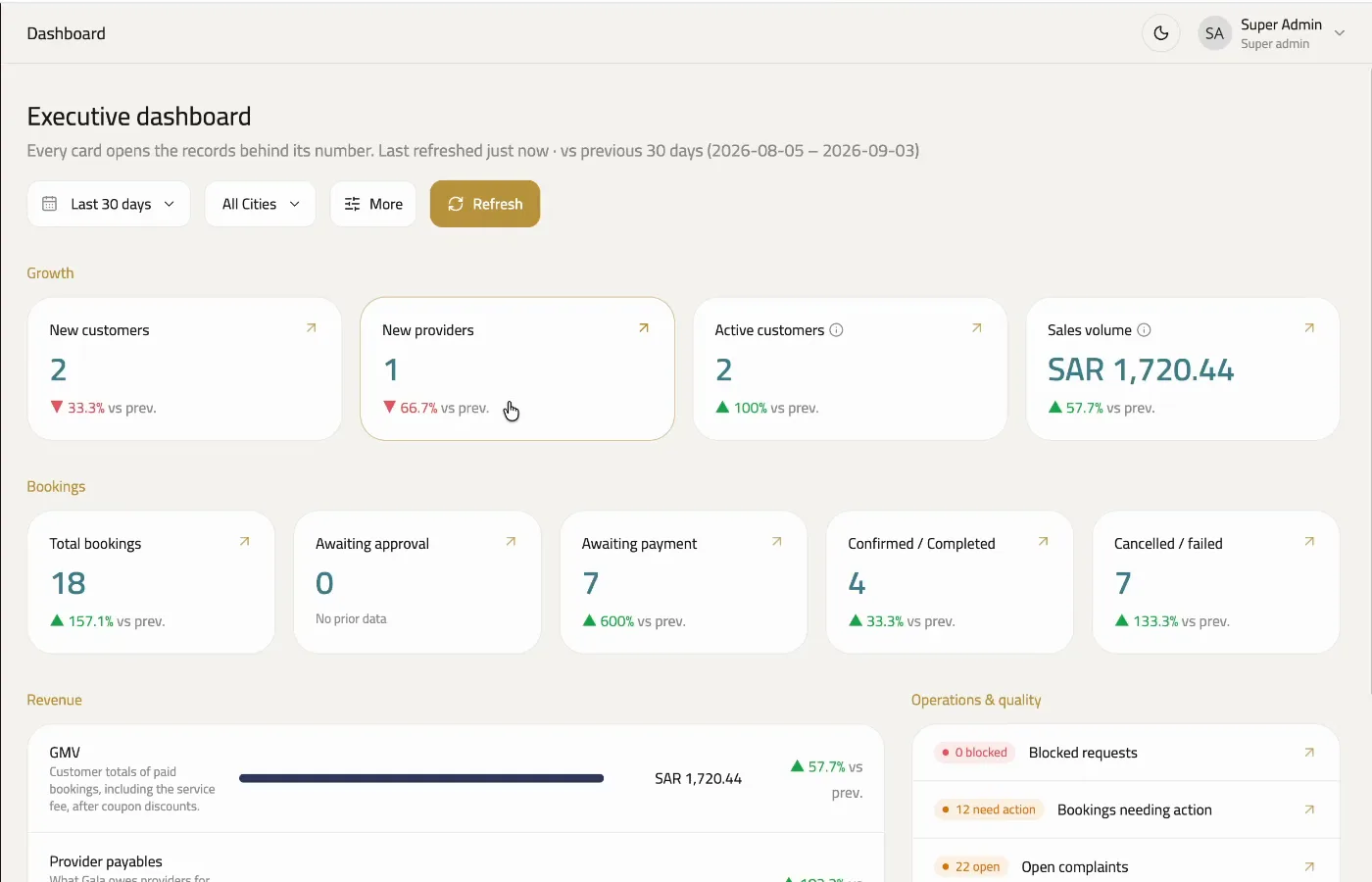
The Gala connects customers with singers, decorators and event managers. It had been built by a previous team: the core worked, but there were bugs, an interface that needed reskinning, and a database whose structure existed only in production — the migration files were missing.
What I built
- 01Recreated the missing database migrations so every environment can be rebuilt to match, on AWS Elastic Beanstalk with MySQL on RDS and files on S3, deployed automatically.
- 02Rebuilt checkout around card payments through MyFatoorah and Tabby and Tamara buy-now-pay-later, with the server — never the app — deciding the amount and confirming payment.
- 03Added the money side a marketplace needs: provider payouts per booking, a hold when a provider's bank account changes, and refunds as records with a status and a full history.
- 04Built booking rules for real events: one confirmed booking per offer and time slot, provider unavailable days, home-visit addresses and reminders the day before.
- 05Reskinned the provider and admin dashboards in React through Laravel and Inertia, serving two Flutter apps from the same API, with 867 automated tests guarding every change.
The hard parts
A database nobody could rebuild
Previous developers had changed the database by hand, so the migration files no longer described it. A new environment could come out with missing tables or different column limits from production. Writing the missing migrations made every environment reproducible again.
Money that has to add up
Between the customer's payment and the provider's payout sit service fees, refunds, complaints and changed bank details. Each payout and refund is a record with a status and history, and a payout is held while a complaint is under review or for three days after a bank account change.
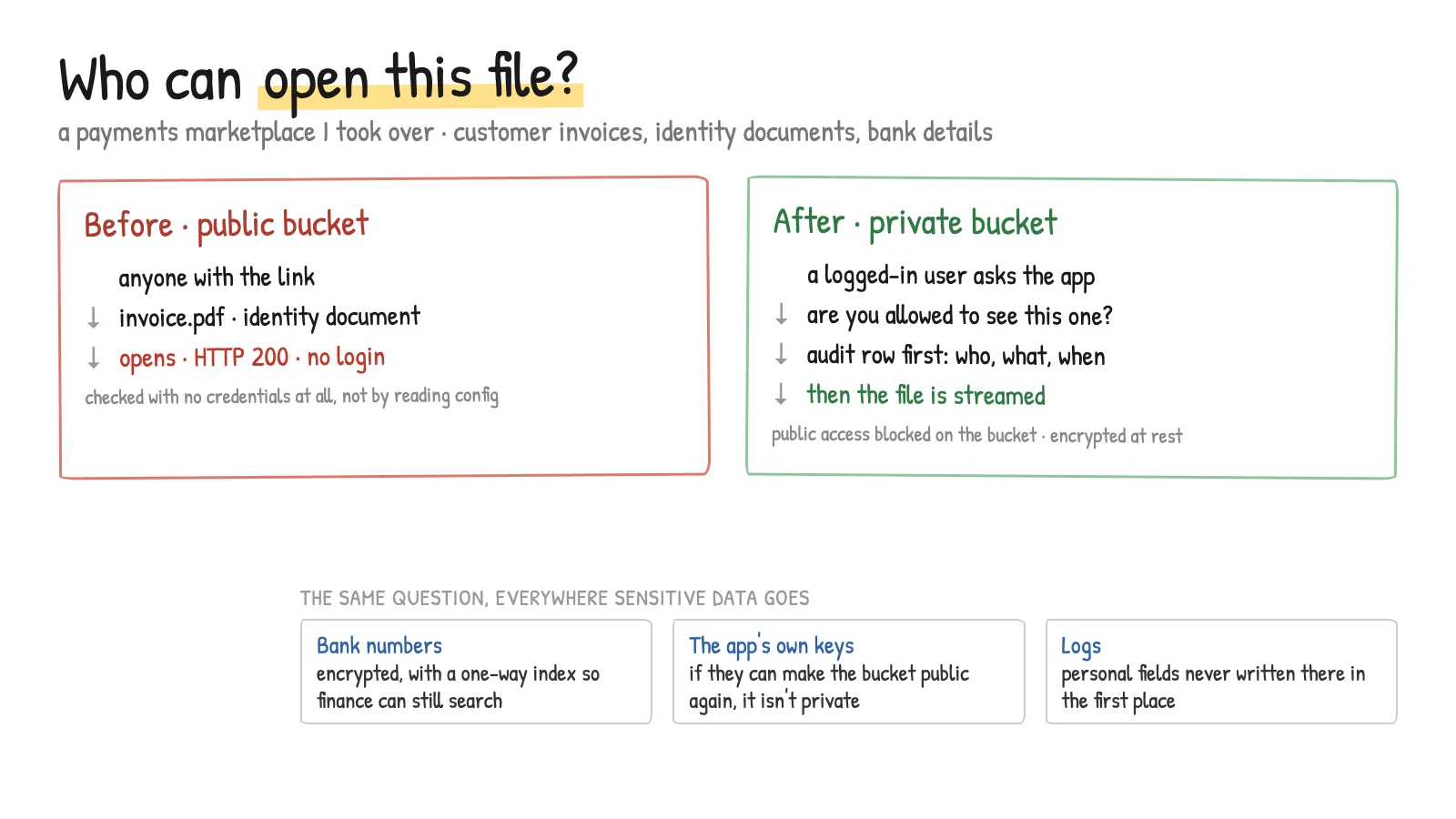
Files anyone with the link could open
Invoices, identity documents and bank details sat in a public bucket. Now the bucket is private: the app checks the signed-in user may see a file, writes an audit row, then streams it. Bank numbers are encrypted, and personal fields never reach the logs.
Watch the walkthrough
Starts at 10:48 in “Full-stack work: six products and the hard part of each”.
Screens