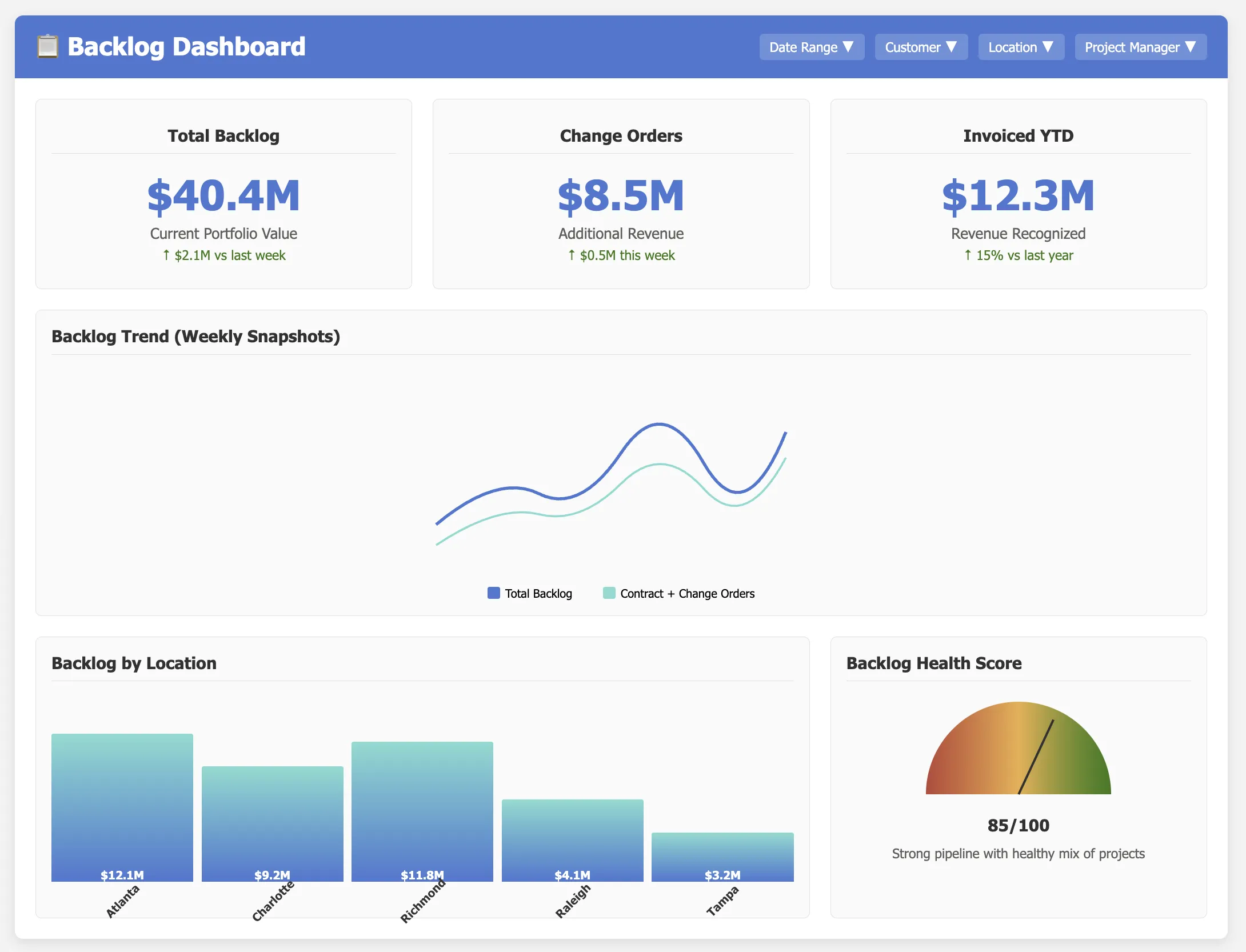
Palmetto Air Balance · Data engineering
One warehouse for a $40M project portfolio
- portfolio made visible
- $40M+portfolio made visible
- Data Factory pipelines
- 50+Data Factory pipelines
Data engineering
I build data warehouses and ETL pipelines that pull your ERP, e-commerce and operations systems into one model — so finance, operations and leadership read the same numbers, refreshed automatically.
Is this you?
What you get
Dimensional models (facts, dimensions, snapshots) on Azure SQL or Snowflake, designed around the questions the business asks.
Azure Data Factory and Snowpark pipelines with incremental loads, MERGE logic, schema-drift handling and alerting.
Shopify (REST and GraphQL), NetSuite, UKG, Apparel Magic, Keepa and other APIs reconciled into one model.
Power BI dashboards for revenue, backlog, inventory and utilisation with automated weekly snapshots.
Proof
Palmetto Air Balance · Data engineering
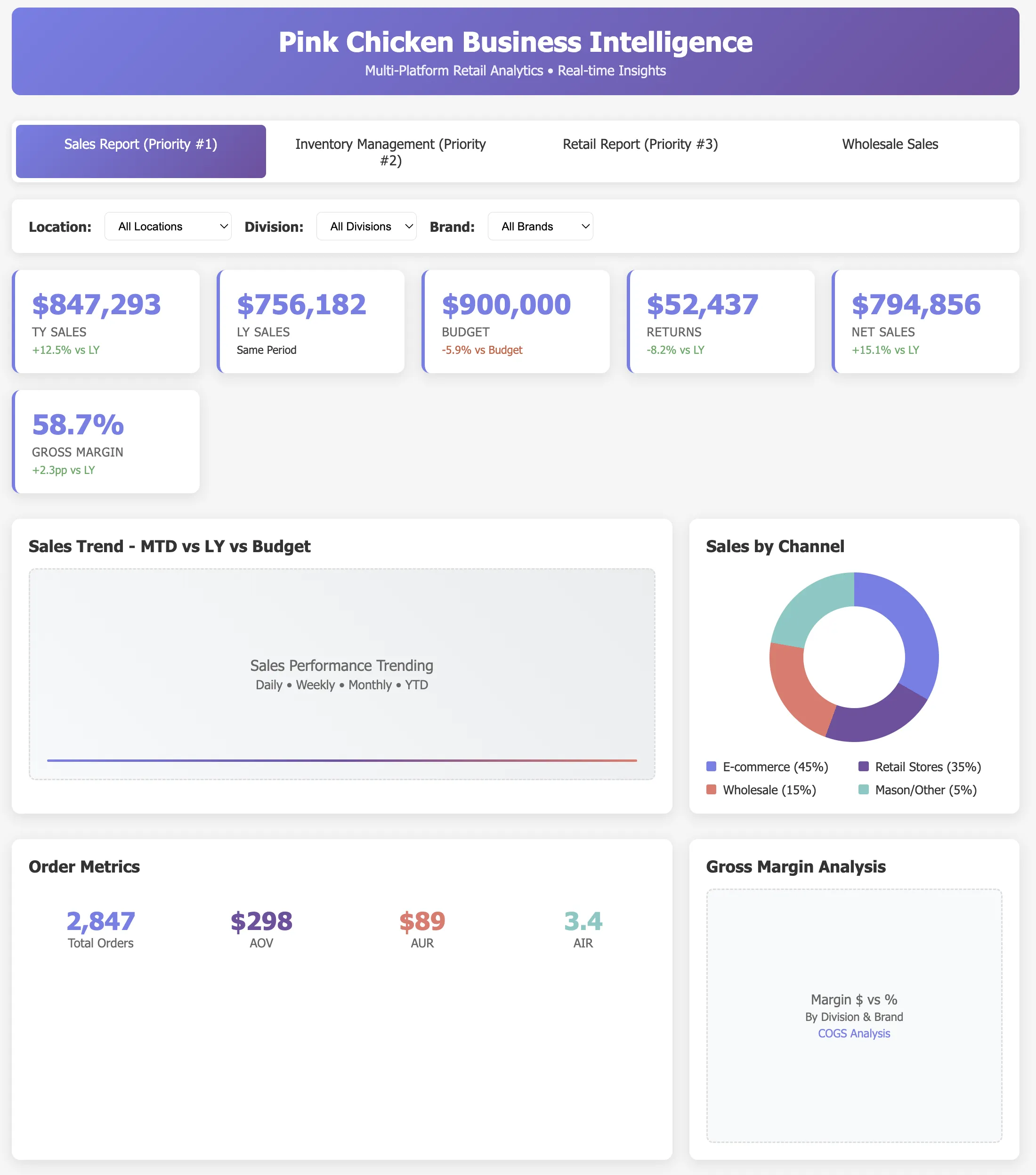
Pink Chicken · Data engineering
75%+
catalogue coverage, up from 15%
E-commerce intelligence platform · Data engineering
FAQ
Azure Data Factory with Azure SQL for most warehouse builds, Snowflake with Snowpark (Python) for large catalogue and enrichment pipelines, and Power BI for reporting.
Yes. On one retail project I traced a 1–3% monthly sales gap to gift-card refunds that Shopify's REST and GraphQL APIs classify differently, and rebuilt the pipeline to reconcile them.
A first version covering one or two source systems and the key reports is usually a few weeks. Each further source is added as its own increment.
Cost is part of the design. On one Azure project I cut monitoring costs from about $1,000 a month to $0.10 by removing redundant alert rules.
Tell me what you are building and where it hurts, and I will come back with questions or a plan.