Skip to content
Muhammad Safyan

Pink Chicken

Retail numbers that finally match

Unified Shopify (10+ stores) and Apparel Magic in an Azure warehouse, fixed a 1–3% monthly sales gap and cut Azure Monitor costs from $1,000 to $0.10 a month.

stores unified
10+stores unified
sales gap closed
1–3%sales gap closed
saved a year on monitoring
$12Ksaved a year on monitoring

The problem

A fashion brand selling through 10+ retail stores, e-commerce and wholesale could not reconcile Shopify with its Apparel Magic warehouse system, and monthly sales were off by 1–3%.

What I built

  1. 01Built an Azure warehouse unifying Shopify and Apparel Magic, with virtual-warehouse logic that stops inventory being counted twice.
  2. 02Traced the sales gap to gift-card refunds that Shopify's REST and GraphQL APIs classify differently, and rebuilt reconciliation on the GraphQL order-changes API.
  3. 03Found that incoming stock exists only in Shopify's GraphQL API and merged both endpoints without breaking incremental loads.
  4. 04Cut Azure Monitor from about $1,000 a month to $0.10 by replacing redundant rules with one essential failure alert.
  5. 05Added daily incremental loads, inventory snapshots and a dimensional model valuing stock at cost, retail and wholesale.

Screens
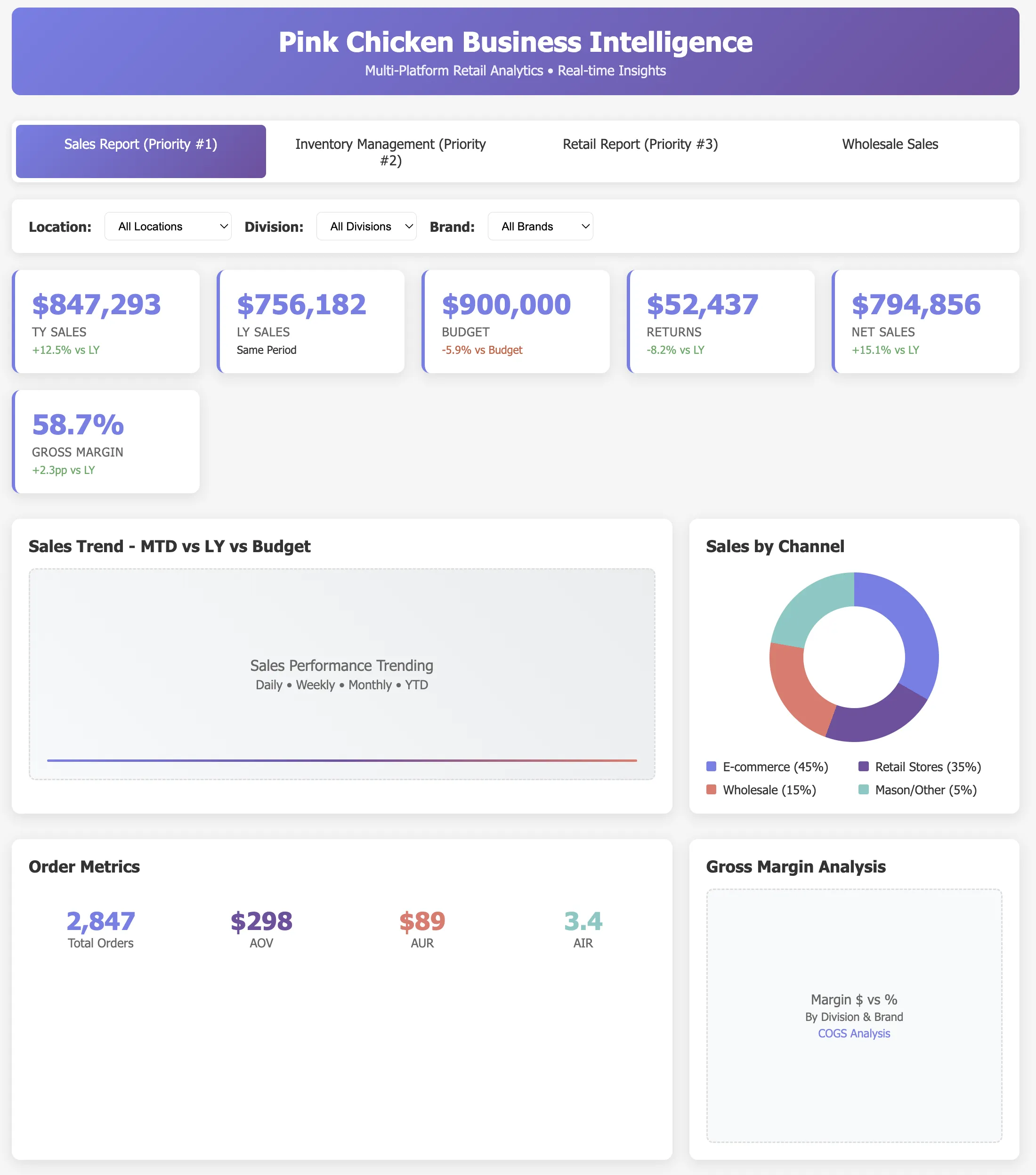
Retail business intelligence dashboard mock-up with sales, returns and sales by channel

75%+

catalogue coverage, up from 15%

E-commerce intelligence platform · Data engineering

From 15% to 75% catalogue coverage on Snowflake

faster database loads
10–20xfaster database loads
products per run
100k+products per run
Read the case study

Want results like these on your project?

Tell me what you are building and where it hurts, and I will come back with questions or a plan.